Article

The Roof Stops Being Leftover Space: How an Ordinary Roof Becomes a Climate Asset

The roof has turned from forgotten space into climate real estate. How a combined roof works, what an active blue roof adds, and why regulation is already pointing at your building.

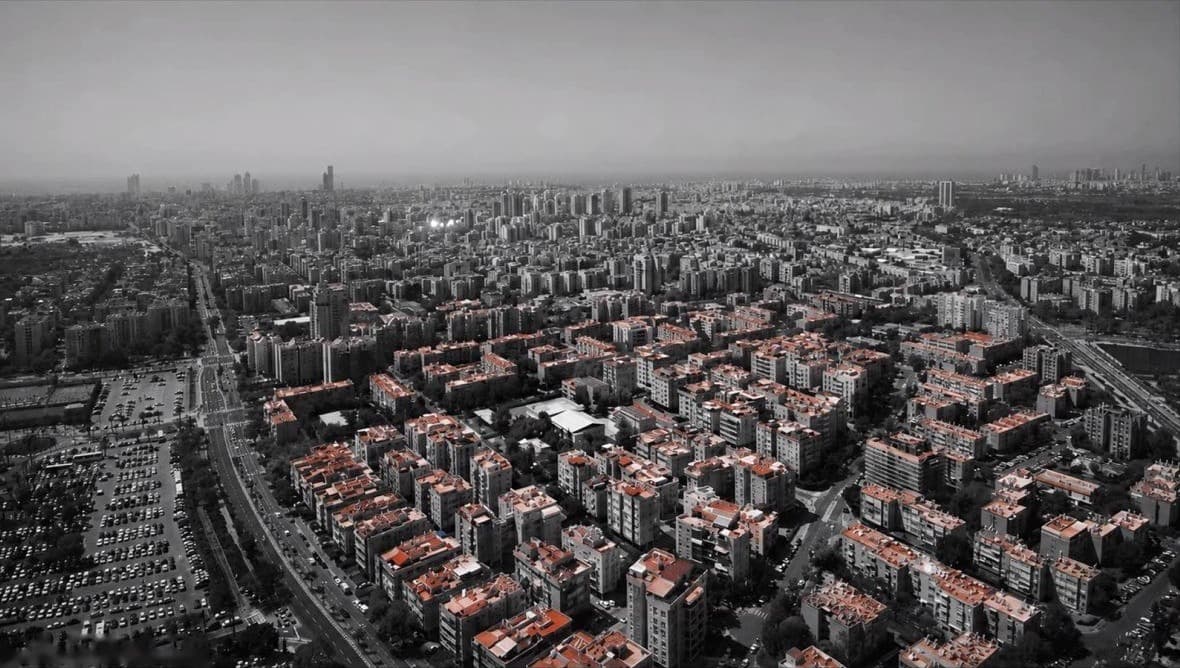
Aerial view of a dense city, rooftops highlighted as an urban resource
Photo: Lior Zelensky (adapted)

From Leftover Space to Climate Real Estate

For decades we treated the roof as leftover space. Whatever remained after the architect finished: a water heater, an AC condenser, a few antennas. But add up all the roofs in a city and you get an enormous surface, and in a world where a 100-year storm now arrives once a decade, no city can afford to leave it empty. This is not a forecast. Cities around the world, with Rotterdam leading the way, have already mapped every roof and assigned it a purpose. In Israel the process is well underway: municipalities are mapping roof potential at the neighborhood level and drafting implementation policies by building type. The roof has turned from forgotten space into strategic real estate.
Four Layers, One Roof

Urban planners talk about four families of productive roofs, each with its own color:

  • A blue roof detains rainwater on the roof and releases it at a controlled rate, instead of flooding the street at the peak of the storm. A blue roof can hold 30-50 liters of water per square meter in a single rain event.
  • A green roof brings vegetation into the city: cooling, biodiversity, insulation.
  • An energy roof produces electricity with solar panels, and regulation is already pushing in that direction: large development plans are required to assess production potential and design for it.
  • An active roof gives the roof back to people: community gardens, urban farming, shared space.

The good news: you do not have to choose. A combined roof does several of these at once, and the combination is stronger than the sum of its parts.

The Synergy That Makes the Difference

Take a solar green roof. The vegetation cools the back of the panels, and a cooler panel produces more electricity. The panels, in turn, shade the plants and cut their water consumption. Two elements that are each good on their own, and better together. Now add the blue layer. The rainwater detained on the roof in winter is exactly the water the vegetation needs. Instead of sending it to the drain, it irrigates the roof. Water that used to be a drainage problem becomes a resource, the vegetation thrives, the panels produce, and the city gets a roof that manages the storm instead of dumping it downstream.

The Problem With "Passive"

So why is this not happening on every building? Because existing runoff solutions were built for the last century. Infiltration wells, underground reservoirs and passive blue roofs require heavy construction work, they are not synchronized with each other, and none of them measures in real time how much runoff was actually managed. That gap is critical: 20% of natural-disaster damage worldwide comes from rainwater flooding, and the average damage per event in an industrial or commercial building reaches 2 million dollars. Infrastructure you cannot measure is infrastructure you cannot manage, enforce or improve.

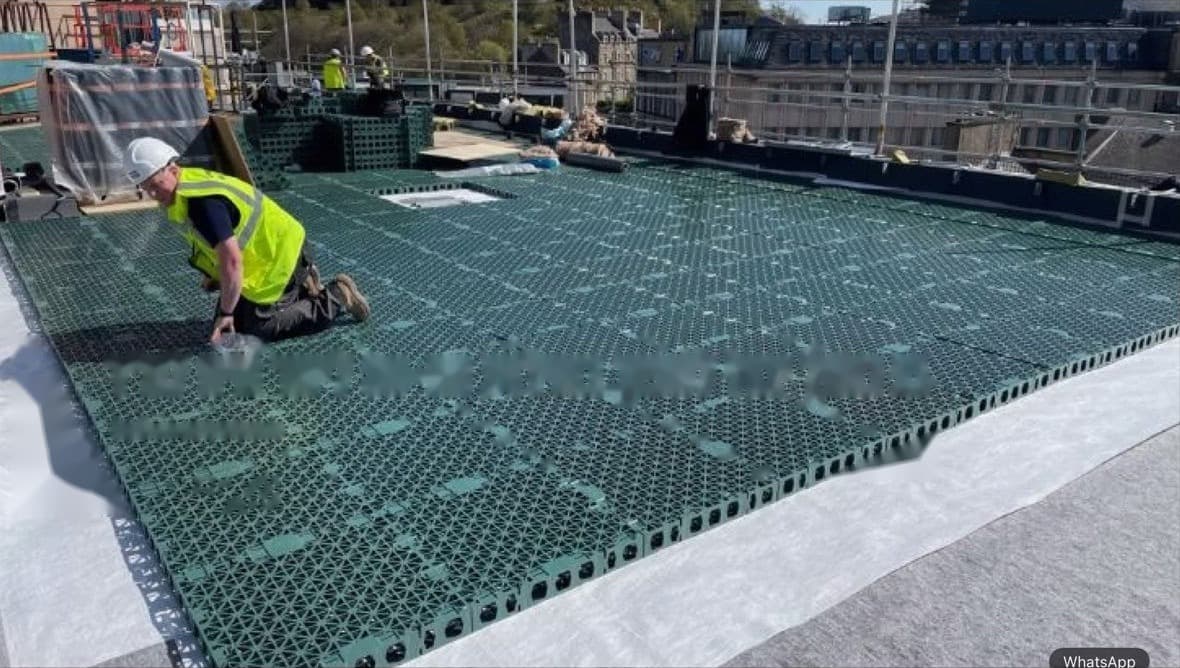
Blue roof detention layer being installed on a flat roof
Photo: Geotexan

The Active Blue Roof: The Managed Version

This is where the next generation comes in. A small unit mounts on any existing roof drain, with no waterproofing work and no construction, and operates in three steps. A pressure sensor tracks the water level on the roof in real time. An algorithm combines the level with the weather forecast and site conditions. The valve opens or closes accordingly, and every action is logged. The result has been measured in the field: roughly a 30% reduction in peak discharge from a single connected roof. At the scale of a neighborhood, that is the difference between a flooded street and a wet one. And if anything fails, power, connectivity, anything, the valve defaults to open. The roof keeps draining normally.

Regulation Is Already There

Anyone filing for a building permit today knows the hydrological requirement in the drainage appendix. An active blue roof answers it without digging a reservoir underground, earns 5.5 points in the green building standard, and gives the authority exactly what it lacks: documentation. Rain event reports with real data, alerts on deviations, and clean exports for authorities and insurers. Municipal roof policies in the making point at clear targets: commercial and employment buildings with roofs over 250 sqm, building additions over 100 sqm, new and renovated public buildings, and urban renewal districts. If your building is in one of these categories, the question is not if, but when.

Where to Start

Unlike reservoirs and wells, there is no construction project here. Installation is self-serve, up to 15 minutes per drain, on any existing roof. Start with one roof, watch the data on the dashboard in the first rain event, and expand from there. 17 active deployments in Acre, Tel Aviv, Jerusalem and Haifa have already taken that step. Your roof already exists. The only question is whether it stays leftover space, or goes to work.

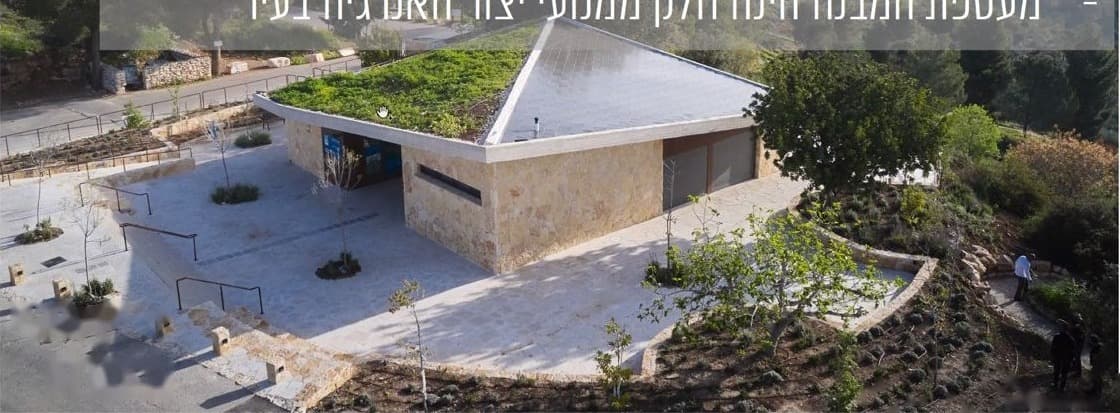
Public building with a combined green and solar roof
Photo: Lior Avitan

Want to see what this looks like on your roof?

Tell us about your building and we will map what a combined roof could do there.